Why Homeowners Ask This Question 🤔
Most homeowners ask about reusing framing because:
- The deck “looks fine”
- The structure doesn’t feel bouncy
- The posts seem solid
- They want to reduce cost
- They’re upgrading to composite decking
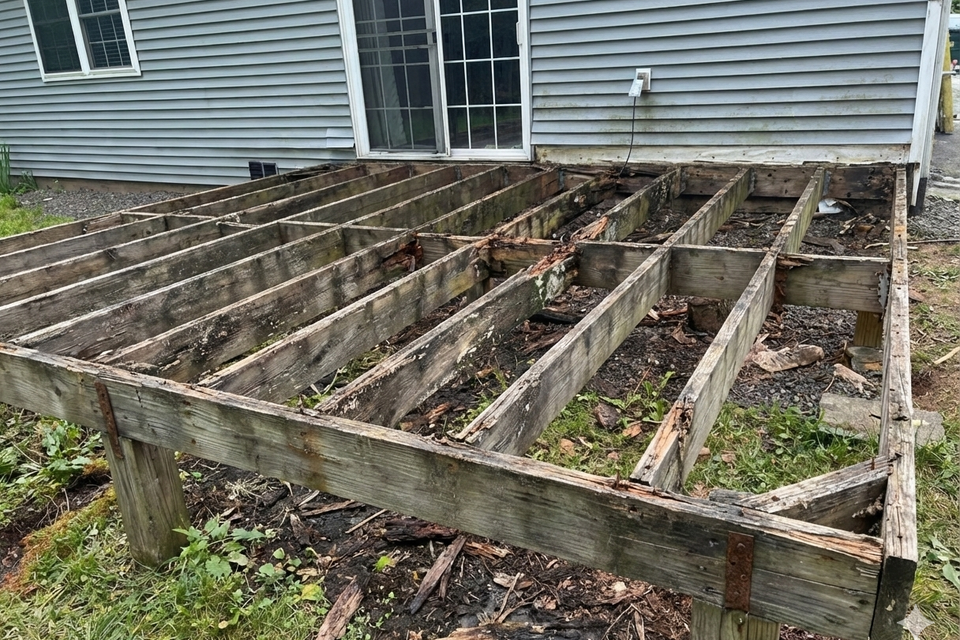
The problem is, framing issues often aren’t visible from the surface.
The Biggest Risk: New Decking on Old Structure ⚠️
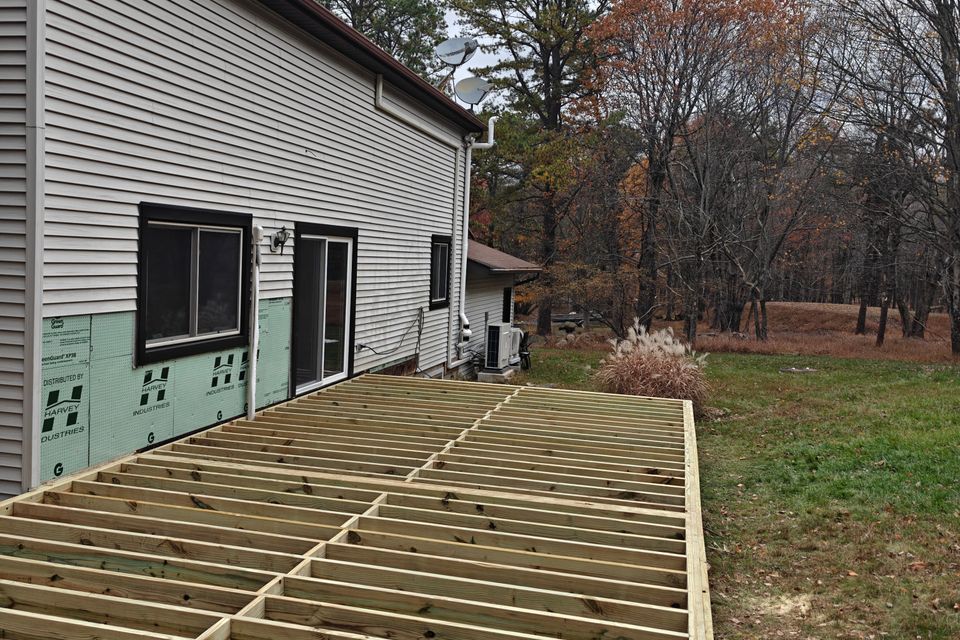
Composite and PVC decking are designed to last decades. If they’re installed on framing that only has a few good years left, the deck surface will outlast the structure beneath it — which means tearing everything apart later.
Replacing framing
after installing composite decking is far more expensive than doing it right the first time.
When Existing Framing MAY Be Reused ✔️
Reusing framing can make sense if
all of the following are true:
- The framing is structurally sound with no rot
- Joists are properly spaced for composite decking
- Beams and posts meet current code
- Ledger attachment is correct and properly flashed
- The foundation shows no movement or settling
- The framing is level, straight, and solid
- The deck height and layout aren’t changing
This requires a full structural inspection — not a guess.
When Reusing Framing Is a Bad Idea ❌
In many cases, replacing the framing is the smarter move, especially if:
- The deck is more than 10–15 years old
- There is any rot, splitting, or soft wood
- Joist spacing doesn’t meet composite requirements
- The deck has noticeable slope or movement
- The footings or piles show signs of settling
- The ledger attachment is questionable
- You’re investing in high-end composite or PVC decking
Putting premium materials on questionable framing is one of the most common deck mistakes homeowners make.
Code Changes Matter More Than Most People Realize 📏
Deck codes have changed significantly over the years — especially around:
- Ledger attachment
- Hardware and fasteners
- Joist spacing
- Load requirements
- Guardrail and stair construction
A deck that was “code compliant” years ago may not meet today’s standards. Reusing framing without verifying this can create safety and inspection issues down the road.
Cost vs. Value: The Real Comparison 💰
While reusing framing can save money upfront, it often costs more long-term if problems show up later. Many homeowners ultimately choose to replace framing because:
- It protects their investment
- It allows for better design and layout
- It qualifies the deck for stronger warranties
- It eliminates future structural repairs
- It ensures the deck lasts as long as the decking
In many cases, rebuilding the framing provides better value — not just lower risk.
Why a Professional Evaluation Matters 🧠
This isn’t a decision that should be made from photos or assumptions. A proper evaluation includes:
- Visual inspection
- Probing for hidden rot
- Checking joist spacing and alignment
- Verifying ledger attachment
- Reviewing foundation stability
- Confirming code compliance
A contractor who takes the time to explain these factors is helping you make the right decision — not the fastest one.
So, Should You Reuse Your Deck Framing?
Sometimes yes. Often no.
The right answer depends on the condition of the structure, the materials you’re choosing, and how long you want the deck to last.
A quality contractor will walk you through the pros and cons honestly — even if that means recommending more work now to avoid bigger problems later.
Thinking About a Deck Project? Let’s Talk. 🤝
If you’re considering resurfacing, upgrading to composite, or rebuilding your deck, we’re happy to take a look and give you clear, honest guidance. We’ll explain what can be reused, what shouldn’t be, and why — so you can make the best decision for your home and budget.
No pressure. No guesswork. Just straight answers and a clear plan forward.
Next Week’s Blog Teaser 🔥
Up next: How Long Does a Deck Really Last? What Homeowners Should Expect From Wood vs Composite.We’ll break down realistic lifespans, maintenance expectations, and what actually causes decks to fail — so you can plan once and avoid rebuilding sooner than expected.