Why Deck Maintenance Matters 🧠
Decks don’t usually fail suddenly. Most problems develop slowly, out of sight, due to:
- Moisture exposure
- Trapped debris
- Freeze–thaw cycles
- Deferred upkeep
Good maintenance doesn’t just keep a deck looking nice — it helps prevent rot, corrosion, and structural weakening over time.
Maintenance for Pressure-Treated Wood Decks 🪵
Pressure-treated wood decks require the
most ongoing maintenance, especially in a four-season, wet climate.
What actually matters:
-
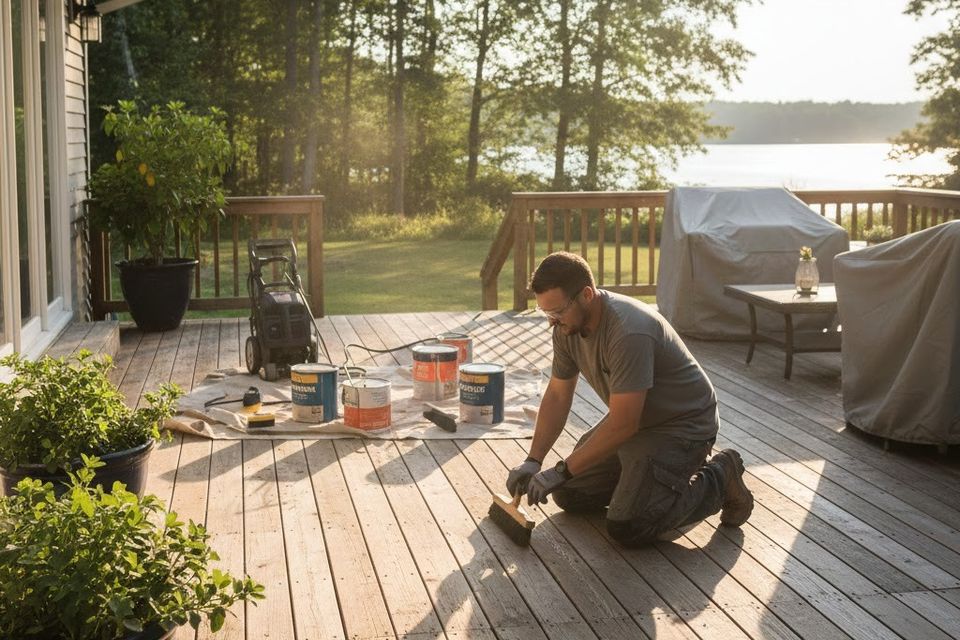
Annual cleaning to remove dirt, leaves, and organic buildup
-
Regular sealing or staining, typically every 2–3 years
-
Keeping board gaps clear so water can drain
- Prompt replacement of cracked or rotting boards
- Checking fasteners and railings for looseness
What homeowners often underestimate is how quickly skipped maintenance adds up. One missed season won’t destroy a deck — but repeated neglect allows moisture to penetrate framing, accelerate rot, and shorten the deck’s lifespan significantly.
Wood decks are not “set it and forget it.” Consistent upkeep is what determines whether they last closer to 10 years or closer to 20.
Maintenance for Composite Decking 🧱✨
Composite decking dramatically reduces maintenance — but it doesn’t eliminate it entirely.
What composite decks actually need:
-
Occasional washing with water and mild soap
- Keeping debris out of board gaps
- Seasonal checks of railings and stairs
What composite decks do
not need:
- No sealing
- No staining
- No sanding
- No refinishing cycles
Composite boards don’t rot, absorb moisture, or splinter, which removes many of the problems homeowners associate with traditional wood decks.
Composite Decking on Pressure-Treated Framing: The Hidden Maintenance Factor 🪵➡️🧱
The most common deck system today is composite decking installed on pressure-treated wood framing. While the surface maintenance is minimal,
the structure underneath still ages like wood.
What matters long-term:
- Protecting joist tops from moisture
- Using corrosion-resistant hardware
- Maintaining good airflow under the deck
- Keeping drainage paths open
Even though composite boards may look great for decades, the framing beneath them still benefits from thoughtful moisture management and periodic checks.
Winter Maintenance: What Matters (and What Doesn’t) ❄️
Winter is when many homeowners worry they’re doing the “wrong” thing.
What matters in winter:
- Avoid letting debris trap moisture under snow
- Watch for new movement or sagging
- Clear ice only when needed for safety
What usually doesn’t matter:
- Light to moderate snow accumulation
- Routine shoveling for structural reasons
- Panic after a single heavy snowfall
Snow rarely damages a deck by itself. It reveals problems that already exist.
Maintenance Tasks That Are Often Overrated 🚫
Some commonly recommended tasks don’t add much value:
- Over-washing or power washing aggressively
- Sealing too frequently
- Scraping ice with metal tools
- Cosmetic fixes without addressing structure
Overdoing maintenance can sometimes cause more harm than good, especially when surfaces or fasteners are damaged in the process.
How Often Should You Actually Think About Deck Maintenance? 📅
A simple rule of thumb:
-
Quick visual checks: a few times per year
-
Cleaning: once per year
-
Wood sealing/staining: every few years
-
Structural awareness: anytime something feels different
Maintenance doesn’t need to be complicated — it needs to be consistent.
When Maintenance Isn’t Enough ⚠️
There’s a point where maintenance can’t fix structural aging. Warning signs include:
- Soft framing or posts
- Persistent movement or bounce
- Multiple recurring repairs
- Rot that returns after patching
At that stage, planning for repair or replacement is smarter than continuing maintenance alone.
A Practical Way to Think About Deck Maintenance
Maintenance is about
slowing deterioration, not stopping time.
Well-maintained decks last longer, feel safer, and cost less over their lifetime — but every deck has a natural service life.
Understanding that upfront helps homeowners plan smarter and avoid surprises.
Have Questions About Maintaining Your Deck? Let’s Talk. 🤝
If you’re unsure whether your deck just needs maintenance — or something more — we’re happy to talk it through. We’ll help you understand what matters, what doesn’t, and how to plan realistically based on your deck’s materials, age, and condition.
No pressure. Just clear guidance.