What Is Frost Heave — and Why Does It Matter Here? 🌡️
Frost heave occurs when moisture in the soil freezes, expands, and pushes upward. When temperatures fluctuate — especially in rocky, moisture-rich soil like we have throughout the Poconos — that pressure can lift concrete footings and anything attached to them.
Then when the ground thaws, it doesn’t always settle back evenly.
Over time, that movement can lead to:
- Sloping decks
- Stair misalignment
- Posts pulling out of plumb
- Stress on framing connections
- Cracks in concrete footings
Freeze–thaw cycles are normal here. Movement doesn’t have to be.
Why Traditional Concrete Footings Can Struggle in Poconos Soil 🪨
Concrete footings have been used for decades. When installed perfectly and deep enough, they can perform well.
But in rocky Poconos soil, challenges often include:
- Large stone pockets that prevent proper excavation
- Inconsistent soil density
- Drainage variations
- Frost depth that must be accurately accounted for
If a footing isn’t installed below the true frost line — or if soil conditions aren’t ideal — frost heave can still affect it.
Even a small amount of vertical movement can translate into noticeable shifting above ground.
The Problem With “Good Enough” Foundations ⚠️
A deck might look solid on day one, but foundations determine how it performs over the next 20–30 years.
Foundation movement leads to:
- Framing stress
- Fastener loosening
- Premature wear
- Ongoing adjustments
Homeowners often assume movement is just “normal settling.” In many cases, it’s foundation instability slowly revealing itself.
How Helical Piles Change the Equation 🔩
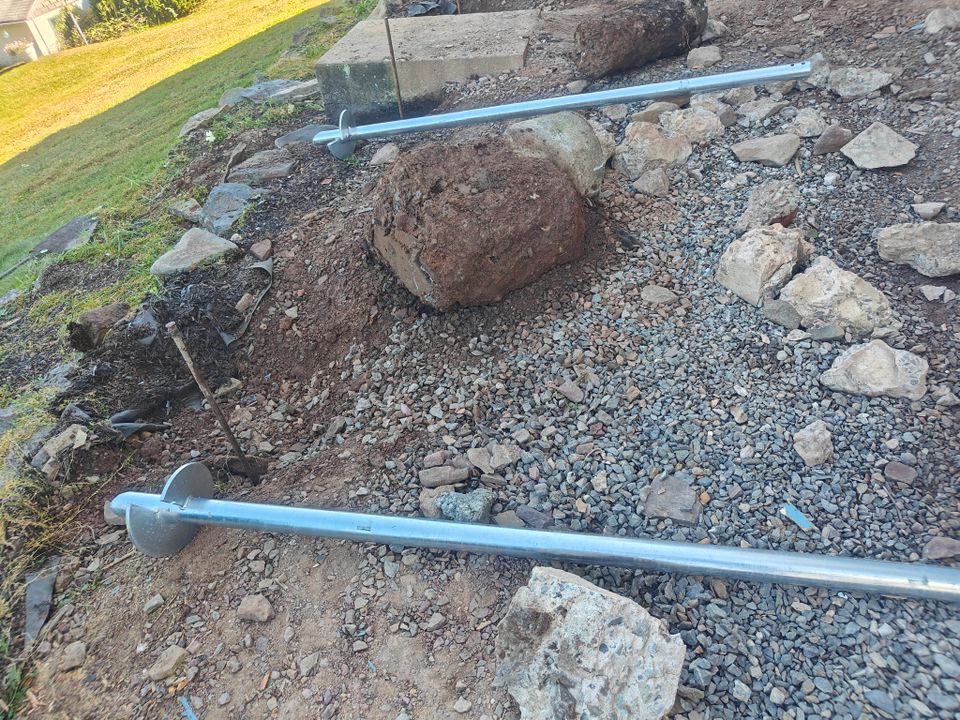
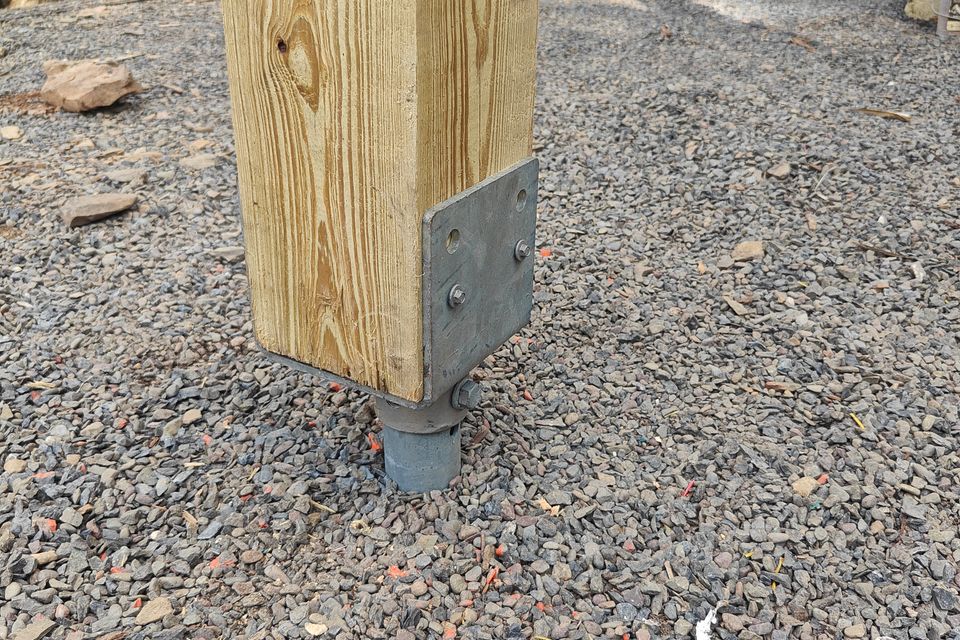
Helical piles — often described as steel screws — work differently than concrete footings.
Instead of relying on surface soil resistance, they are mechanically advanced into stable soil layers below the frost zone.
That means:
- They bypass the active freeze–thaw layer entirely
- They anchor into consistent load-bearing soil
- They are installed with measurable torque for verification
- They provide immediate structural stability
Because they extend below frost depth and are mechanically secured, they dramatically reduce the risk of seasonal movement.
Why This Matters in the Poconos ❄️
Our region experiences:
- Deep frost penetration
- Rocky, inconsistent soil
- Heavy snow loads
- Frequent freeze–thaw transitions
These conditions amplify the weaknesses of shallow or improperly installed foundations.
Helical piles are specifically suited to:
- Rocky terrain
- Limited access areas
- Elevated deck structures
- Projects requiring long-term structural reliability
They’re not trendy — they’re practical for our environment.
Integrity Isn’t Just About Materials — It’s About Foundations 🧱
Building for today is easy.
Building so it won’t move in five, ten, or twenty winters takes intention.
Choosing a foundation system that minimizes frost movement isn’t about upselling — it’s about protecting the structure above it.
When a deck feels solid year after year, it’s usually because what’s underground was done right.
What Homeowners Should Ask ❓
Instead of asking:
“What does the deck cost?”Ask:
“How is it being supported?”The answer tells you how confident you can feel long-term.
Planning a Deck This Year? Stability Starts Below Ground 🤝
If you’re considering a new deck in the Poconos and want to avoid seasonal shifting or long-term adjustments, foundation choice matters more than most homeowners realize.
We believe a deck shouldn’t just look level — it should stay level.
If you’d like to understand what foundation system makes sense for your property, we’re happy to walk you through it.
Next Week’s Blog Teaser 🔥
Up next: Renovate vs. Relocate: The Financial Case for Expanding the Home You Already Love.We’ll explore how additions, sunrooms, and outdoor living spaces compare to the cost and stress of moving in today’s market — and why many homeowners are choosing to expand instead.